
GA Flightpath 2030+: What the New EASA Strategy Means for Your DTO Today
An instructor arrives early to prepare a navigation lesson. One student has worked through the theory online; another has opened the course but needs help with wind correction. The aircraft is ready, the weather window is short, and the head of training wants both students to leave with something understood. That is where a strategy for general aviation has to earn its place in a DTO's working day.
GA Flightpath 2030+ sets a direction for European general aviation, including simpler processes and the adoption of useful technology. For a Declared Training Organisation, the immediate question is whether it changes what you must do tomorrow. The strategy itself does not replace your applicable training rules or create a new syllabus. It does give you useful priorities for improving the school you already run.
This guide looks at what those priorities mean for DTO owners and heads of training, using the programme described in EASA's 2026 safety plan and current training guidance. The suggested school actions are practical recommendations; existing regulatory duties are identified separately.
Contents
What GA Flightpath 2030+ actually covers
The 2026 European Plan for Aviation Safety addendum describes four workstreams. Declared by Default explores more proportionate declaration-based processes. Greener Faster supports cleaner aviation technology and the infrastructure needed to use it. Fly Direct addresses more efficient access, including work on satellite-based instrument approaches at suitable general aviation aerodromes. iConspicuity a Reality promotes electronic visibility between airspace users.
Digital tools can support several of these ambitions. However, calling the whole programme a digital-training reform would give a DTO the wrong impression. A strategy identifies work to pursue. The resulting rules, guidance and operational arrangements have to be considered individually as they emerge.
For your school, a sensible response begins with a small distinction in how you handle incoming information. Establish whether an announcement contains an applicable requirement. Keep proposals and guidance clearly identified. Then identify the person who will check its relevance to your operation. That simple habit prevents an interesting conference presentation from becoming an unnecessary training-programme rewrite.
A useful management question is: which problem would this change solve here? If instructors spend time reconstructing student progress from separate messages, better records may help immediately. If your current system works reliably, a new platform needs a clearer business case than the word digital on its sales page.
Declared by Default and your existing responsibilities
A DTO already operates within a declaration-based framework. The organisation remains responsible for complying with the applicable requirements, and its training programme must meet the relevant Part-FCL requirements. GA Flightpath's broader interest in declarations does not remove those responsibilities or automatically extend the courses your DTO can offer.
Under DTO.GEN.116, changes to the information in your declaration and changes to the training programme must be notified to the competent authority without undue delay. If you are changing how instruction is delivered, establish what the change means for your programme and any applicable authority procedures. Avoid borrowing an approval process from a different type of training organisation without checking whether it applies to yours.
The head of training still has a central role in supervising student progress and ensuring satisfactory integration of flight training with theoretical knowledge instruction. Buying an online course does not transfer that work to the supplier. Someone at the school needs to notice when a student can answer a familiar question but cannot apply the subject in a briefing.
Part-DTO also requires an annual internal review and annual activity report. Use the review to test whether a change has improved training. A shorter administrative task is useful; an instructor being able to identify a struggling student earlier is useful too. Keep enough evidence to judge both, and check the reporting arrangements set by your authority.
Make digital ground school useful to the instructor
The strongest reason to improve digital ground school is the connection it can create between lessons. A student studies a topic before arriving; the instructor sees the areas needing attention and uses the briefing to develop understanding. The software earns its keep when it helps that exchange happen consistently.
Start with one learning task. Before a navigation exercise, ask the student to complete the relevant theory and bring a short explanation of how wind changes the planned heading. During the briefing, use the actual route to explore the answer. A high practice score is helpful evidence, but hearing the student's reasoning tells the instructor something different.
EASA's virtual-classroom and distance-learning guidance, published in August 2026, draws a clear distinction between live instructor-led sessions and recorded material. Where classroom instruction is required, a recording cannot simply be relabelled as a virtual classroom. Live provision needs effective interaction and reliable attendance monitoring. Distance learning also needs appropriate support and supervision of progress.
Before changing your delivery method, assess the risks and follow the applicable change and notification process. Write down how a student gets help between sessions. Decide what happens when a connection fails and how an instructor identifies someone who has stopped participating. These are manageable teaching decisions when they are made before the course starts.
Records deserve the same attention. DTO.GEN.220 requires individual student records to be kept throughout the course and for three years after the last training session. Electronic storage can support that duty, but access and retention still need deliberate arrangements. Test whether you can retrieve a student's training record, including after a subscription ends, before you make a platform central to your operation.
Teach electronic conspicuity as part of lookout
Electronic conspicuity is one of the most tangible Flightpath themes for a training fleet. EASA's iConspicuity initiative includes a voluntary declaration and work on interoperability through the ADS-L Coalition. The strategy itself does not impose a universal purchase requirement on every DTO. Equipment requirements that apply to particular operations or airspace still need their own checks.
The joint EASA and EUROCONTROL air-to-air use case, published in May 2026, describes electronic traffic information as a supplement to existing traffic-avoidance procedures. The displayed picture may be incomplete or incorrect. Some aircraft will not appear. A traffic symbol does not relieve a pilot of the need to look outside or assess other available information.
That gives an instructor a useful lesson objective: the student should understand what the fitted system can show and where its information can mislead. Brief the equipment actually carried in the aircraft. Include its failure indications and how the student will recognise that the traffic picture is unavailable.
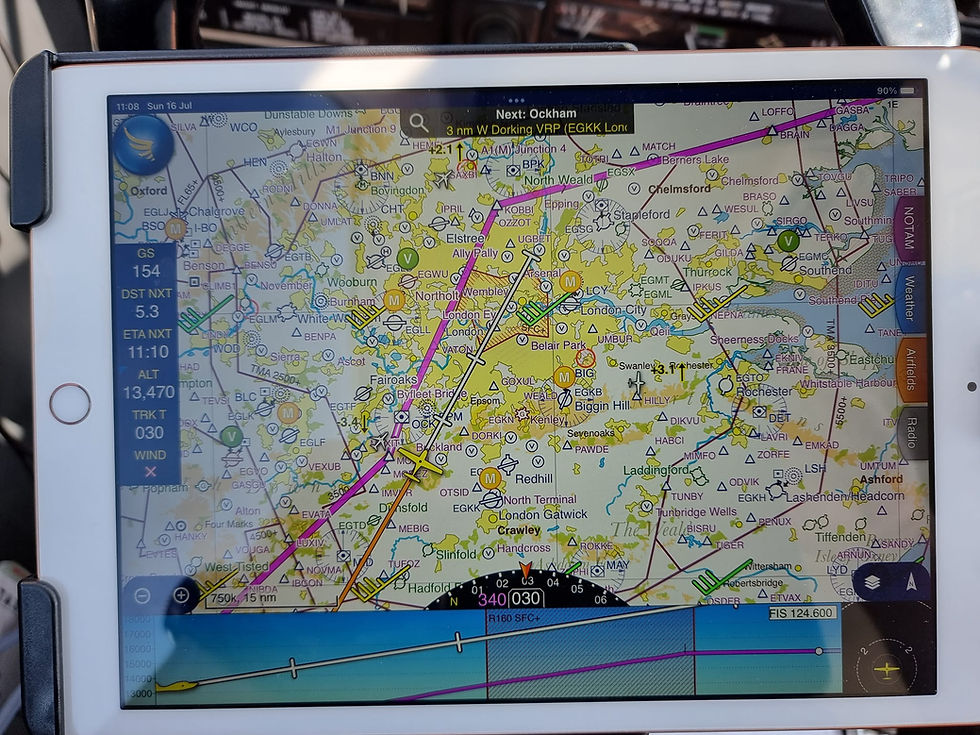
A good ground discussion starts with an apparently empty display. Ask the student what they can conclude about the airspace outside. Then consider a traffic alert during a busy part of the flight. The exercise should lead back to effective lookout and the school's procedures, with the device helping direct attention. Build familiarity on the ground so that learning the controls does not consume airborne attention.
An executive summary for your next staff meeting
You can turn the strategy into a short discussion without making it a separate administrative project. Choose one current weakness and identify who can improve it. Agree how you will check the result. Keep larger expenditure decisions tied to evidence from your operation.
For example, a school might discover that instructors cannot easily see which theory topics have delayed a student's progress. It could trial a shared progress review before the next stage of flight training, then compare instructor feedback after a suitable period. The outcome might justify a better system, or it might show that the existing system needs clearer use.
If online theory is the improvement you are considering, Easy EASA offers a flying-school partnership with your own branding and a commission arrangement. Its school dashboard provides visibility of study time and course progress, alongside practice-exam results. Easy EASA handles setup and student account administration, including payments. The school can then decide how instructors will use that information in teaching.
Discuss the practical fit before introducing it, including the courses your students need. Decide how staff will review progress within your training programme. Easy EASA's partnership page explains the offering and provides a starting point for that conversation. Your DTO remains responsible for its training and oversight of students.
Greener Faster: assess the aircraft's working day
For a DTO, sustainability decisions are tied closely to aircraft utilisation. A trainer has to complete the planned exercises and be available when the next student arrives. Greener Faster's attention to cleaner technology and supporting infrastructure is relevant, but it does not require a school to replace a serviceable fleet on a strategy timetable.
If you are considering a different propulsion system, model a real day's training. Include the intended exercises and the turnaround between bookings, then examine the effect of weather disruption. Ask the supplier for the evidence needed to assess your operation, including the applicable aircraft limitations. A demonstration flight is a useful introduction; it cannot establish how the aircraft will perform across your teaching schedule.
Ground infrastructure can be decisive. Establish whether the aerodrome can support the proposed charging arrangements, who would maintain them and what happens when they are unavailable. Put those answers alongside maintenance support and operating costs in the purchasing decision. A promised saving per flight hour needs to survive the practicalities of keeping the aircraft available.

Fuel choices also need aircraft-specific checks. The presence of an unleaded pump at the aerodrome does not establish that the fuel is approved for every aircraft on the school fleet. Verify the applicable aircraft and engine approvals and any required documentation before a change. Describe the environmental benefit accurately, too: removing lead and reducing carbon emissions are different questions.
There may be worthwhile improvements within the existing fleet. Review avoidable ground running within approved procedures, and look at how scheduling affects unnecessary repositioning. Ask instructors where resources are being wasted without improving learning. Assess each suggestion for safety before adopting it; an environmental objective should never become pressure to reduce a required reserve or hurry a check.
Fly Direct: follow local developments carefully
Fly Direct includes work towards GNSS-based instrument approaches serving general aviation aerodromes with non-instrument runways. For a school at an aerodrome where such developments are being considered, that may eventually affect access and the surrounding operation. The local procedure and its conditions will determine the practical effect.
For a PPL training DTO, the immediate task is to follow credible local developments and understand their relevance. A strategy document does not establish a usable approach at your aerodrome, change weather minima or give a pilot instrument privileges. Any future use depends on the published arrangements and the qualifications and aircraft capabilities required.
You can still use the subject constructively in ground instruction. Students benefit from understanding that a route drawn on a navigation display has to be considered alongside airspace and operating rules. If your aerodrome introduces a new procedure, brief the effect on your own flights using the authoritative local information. Keep the teaching focused on what students will encounter.
Choose a first improvement and check the result
Bring the discussion back to an action small enough to complete. A useful starting point is a review of how theory progress reaches the instructor conducting the next flight. Walk through a real student's record with the staff involved. Look for missing information and duplicated work before deciding whether the answer is a new tool or a clearer process.
Next, agree the change and its owner. If you introduce a digital progress review, specify when it happens and who responds when a student needs support. Confirm any training-programme changes and authority notifications required. Give staff a chance to practise the process before expecting consistent use with students.
Choose evidence that reflects the problem you set out to solve. For the progress-review example, ask whether instructors can identify the next teaching need more easily and whether students receive help sooner. Look at the actual records as well as staff impressions. A dashboard full of activity is encouraging only when the activity supports learning.
Use the next internal review to decide whether to keep or adjust the change. Larger projects, such as new aircraft or aerodrome infrastructure, can remain under review until the operational case is clear. Your school does not have to act on every Flightpath workstream at once.
GA Flightpath 2030+ gives DTOs a direction to watch and several useful reasons to examine current practice. The immediate opportunity is to make a specific part of training work better, while keeping your existing responsibilities clear. For many schools, closer coordination between independent theory study and instructor-led teaching is a practical place to begin.
If your DTO is reviewing that connection, the video below shows how the Easy EASA online theory course presents learning to students. Use it to consider how the material could support your own briefings, then explore the flying-school partnership to discuss the fit for your organisation.

Comments